


Page 26 - B2B 8 to 13
P. 26
                                community by the New York-based International Model Products (IMP) in 1951, soon followed by Tenshodo, who had been selling a brass EMD FT diesel A+B combo through Post Exchange (PX) stores on US bases in Asia. These started to be distributed by IMP but in 1954 the west-coast based Pacific Fast Mail (PFM) obtained the exclusive rights to distribute Tenshodo models throughout the USA.
By 1955 screw-driver assembly had given way to assembled ready- to-run, with International offering a “Kustom-bilt” 2-6-2 Prairie for $32 and PFM/Tenshodo offering, in addition to the FT, an assembled and factory-painted EMD GP-7, a C&NW 4-4-2 Atlantic, a NYC 4-6-4 Hudson, and a MoW Wreck Crane. Shortly after this, International started importing models by a variety of builders in boxes labelled Takara (“many treasures”) and L. M. Blum (LMB Models) and Gem Models brought in those of Olympia. By 1960 PFM’s catalogue was already in its 6th Edition and by the mid-1960s the importers included Ken Kidder, M.B. Austin, Akane Models, (also a builder), Continental Models, Balboa Scale Models, Max Gray (Perfection Scale Models), which became the Westside Model Company (from 1960), and also Alco Models (in 1967).
Japanese brass was usually outstanding. “Standard Production” models like most of those from Asahi, KMT and KTM were designed for operation and if issues with drives and motors were corrected by re-motoring and replacing drive elements they would give many years of flawless performance.
The term “Crown” originally referred to the highest quality models produced in limited numbers by United for PFM. The crown symbol was incorporated into United’s logo, which was itself derived from that of a Cadillac motor car, and it soon acquired the same prestigious associations. Consequently, other PFM limited run, finest quality, models were also identified as Crowns, specifically those of Fujiyama and Tenshodo. In a similar vein, the best Olympia models for Gem were known as “Rubies” (they came in a red velvet box), or Ruby Signatures because each was signed by Hiroshi Tagaya. Top-quality GOM models for Custom Brass were known as “Royales”. Those for Balboa by KTM were in a “Master Series”, and much later some Korean models would also be called Crowns (by PSC Iron Horse Models) or “Super Crowns” (Hallmark), whilst the Key Models would be “Classics” and “Super Classics”, or “Bench Mark”, and Overland would have a “Diamond” Series. All
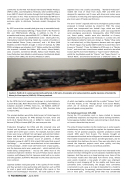
  Southern Pacific AC-9, custom painted and weathered, in HO scale. An example of an early production-quality Japanese articulated by Akane for Gem-Imperial, 1962-64; 233 were produced.
By the 1970s the list of importers had grown to include Hallmark, Custom Brass (CB), North West Short Line (NWSL), Van Hobbies (a Canadian associate of PFM), Trains Inc., US Hobbies (USH) (0- scale), Nickel Plate Products (NPP) and, in 1976, Precision Scale Company (PSC).
The principle builders were Atlas-Asahi (as part of United exports), Tenshodo and Fujiyama for PFM, Olympia for Gem, Orion and GoTo (G.O. Model Works Ltd, or GOM) for Custom Brass and Katsumi (KTM) or Kumata (KMT) for most everyone else.
Production throughout the 1950s and 60s remained slow and limited and by modern standards most of the early Japanese models were rather poor runners. For example, Kumata’s diesel drives were noisy, suffered from split gears and perished rubber; Akane and United had distinct gearbox grind; and cheap open- frame motors were a common source of problems. A Model Railroader review of a KMT 2-10-4 in April 1960 noted that some of the fittings,” .... are not much more than basic in their resemblance to the prototype....tender truck side frames were of poor quality... and the Japanese motor was a weak point ... which resulted in the model being underpowered.” But by the 1970s most of the weaknesses had been rectified. The use of Pitman motors became common and following the first Japanese model with a can motor and idler gearbox, by KTM for Westside in 1978, these also became more common.
Japanese builders took great pride in the quality of their models and they worked in close partnership with importers such as PFM to reach a good solid standard. Although often sparse in fine details and technological innovation, the build quality of later
of which must not be confused with the so-called “Famous Trains” from Key Imports, or the “Prestige Series” from Sunset Models, which are of distinctly below average construction despite generally good running qualities.
The Early Korean Period, 1975-1980
During the 70’s production costs in Japan started to become prohibitively expensive and importers started looking elsewhere. Some Japanese builders had been sub-contracting in South Korea, so it was to there that they turned.
The entry of Korean builders into the market was in some respects revolutionary and was eventually to supplant the Japanese almost entirely. For all practical purposes, Japanese production ceased around 1999, apart from 0-scale. The Koreans brought an entrepreneurial outlook and a willingness to innovate which meant that models incorporated can motors and idler gearboxes, and far more details than had been the norm. They were also able to turn around the importers projects much more quickly, and they offered to paint. But all this was not without problems.
They would build to a price, and were much more interested in the bottom line than meeting the sort of standards established by the Japanese. And they were on a steep learning curve. Some of the first Korean models were fabricated from thinner brass, wheels were poorly insulated, a low grade of solder was employed, resulting in parts dropping off far too readily, and frames were sometimes bent. Unfortunately, the designs were sometimes constructed in such a way as to make it impossible for a model to be disassembled (e.g. for painting), without the need to unsolder one or more parts. During this period there was considerably
 16 ROUNDHOUSE - June 2018


